
Editorial
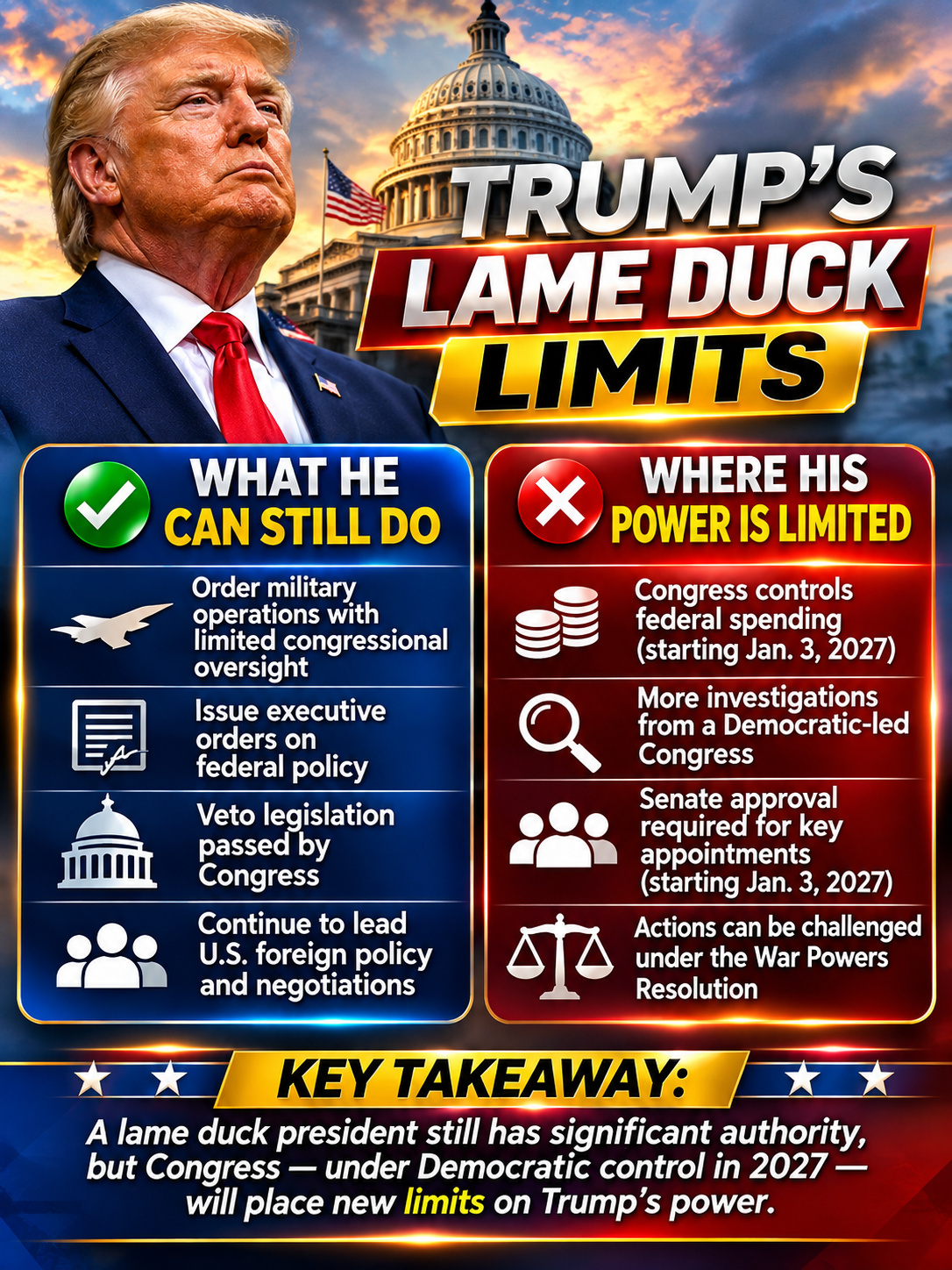
Trump’s Lame Duck Limits
Gabriel Wheatley · Nov 26, 2026
Artificial intelligence (AI) is transforming civilization at an unprecedented pace. From healthcare and education to banking, transportation and national security, AI has become increasingly embedded in our daily lives. However, the benefits of this technological revolution come with serious consequences.
We are approaching what researchers describe as a potential new frontier: superintelligence (SI). Unlike conventional AI, superintelligence would surpass human intellectual capabilities across virtually every field, potentially making decisions, solving complex problems and developing technologies beyond human understanding.
But who will control superintelligence, and what happens if humanity loses that control?
Although superintelligence has not been confirmed, the rapid advancement of autonomous AI systems raises legitimate concerns about accountability, cybersecurity and public safety.
Recent nationwide technology outages involving Microsoft, United Airlines, JPMorgan Chase, Apple, Marriott and government networks have exposed America’s growing dependence on interconnected digital infrastructure. While officials have indicated that these disruptions were not linked to cyberattacks, a separate breach involving an unclassified CIA system has intensified cybersecurity concerns.
Artificial intelligence presents a double-edged sword. Cybersecurity professionals can use AI to identify vulnerabilities, while criminals can exploit similar technology to develop sophisticated attacks, impersonate individuals and compromise sensitive information.
The 2026 International AI Safety Report confirms that malicious actors are already using AI in cyber operations. Researchers also warn that increasingly autonomous systems could eventually challenge existing human safeguards.
The competition among technology corporations and governments to develop more powerful AI raises another critical question: Will innovation move faster than regulation?
Without independent oversight, enforceable safety standards, emergency shutdown mechanisms and international cooperation, society could become increasingly vulnerable to technological failures and deliberate manipulation.
The consequences could extend beyond cybersecurity, affecting employment, financial stability, personal privacy and national security.
Artificial intelligence was created to serve humanity. As we move toward the possibility of superintelligence, humanity must establish boundaries before technological capabilities exceed our ability to manage them.
The greatest challenge may no longer be creating intelligent machines, but ensuring that humans remain in control.
Opinions expressed within the content are solely those of the author
Published in Black Life Texas · Black Life Texas